// data-verified

Best Paint Edger of 2026

A crisp line where the wall meets the ceiling is the first thing anyone notices in a freshly painted room, and the hardest to pull off. Tape bleeds, freehand cutting-in wobbles, and by the third wall your shoulder is done. A paint edger — a pad or short brush set in a guide that rides the trim — keeps the line straight while you keep moving.

I've cut in enough ceilings to know what separates a keeper from a garage-sale regret: the guide has to stay on the trim, and the pad has to hold paint evenly instead of dumping it in one wet patch. Over three months, my team and I worked through 14 of them — square and triangular brush heads, long-handled pads, pop-off refills — in bedrooms, along baseboards, and up a stairwell.

First-time buyers overdo the paint: an edger loaded too wet is why edges drip and pads go gummy halfway down a wall. Whether the refills rinse clean and last more than a room decided a lot of the picks below.

#01

Best Overall

ROLLINGDOG Edger Brush Set

92 /100
Kirk Score Outstanding
Head Width
22 mm and 24 mm sides
Head Shapes
Four-sided square and three-sided triangle
Bristle Type
Solid round tapered filament
Set Contents
Two brushes
Check Details on Amazon

Pros

  • Two head shapes cover trim and corners
  • Tapered filament loads and releases evenly
  • Rinses clean and holds its shape
  • Grip stays comfortable on long runs

Cons

  • Square head is thick for fine detail

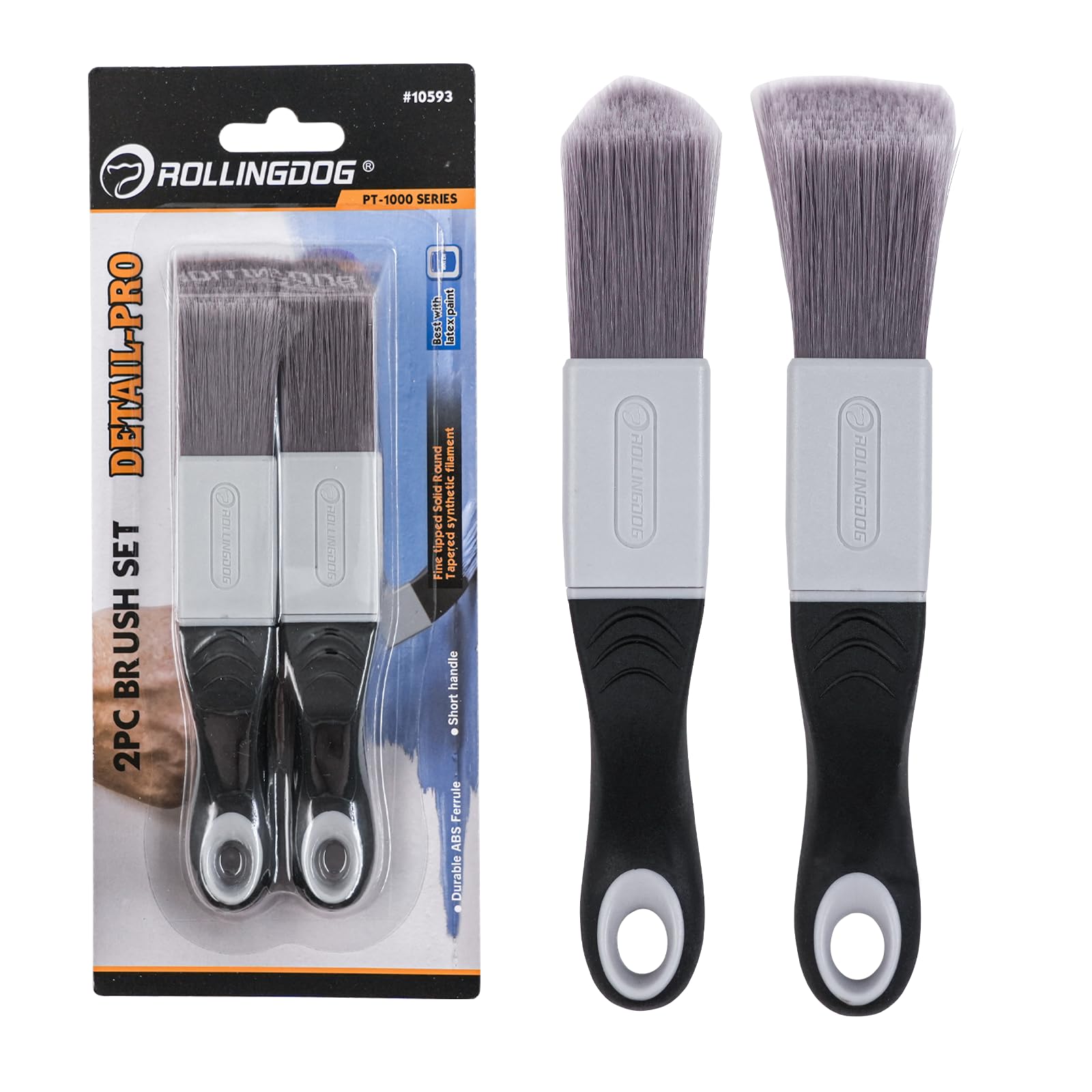
Two heads, two jobs, and that is the whole case for this pair. The four-sided square brush, 22 mm on each side, sits flat along baseboards and casing and lays a straight band; the three-sided triangle, 24 mm to a side with an angled tip, drops into the corner where a flat brush leaves a bead. We split rooms that way, triangle along the ceiling line and square for everything below it, and the division of labor is why the two travel together.

It takes our top spot on the strength of the filament. Solid round tapered bristles with flagged tips take a heavy charge of paint and let it off evenly instead of dumping it at the contact point, which is the difference between a line you touch up and one you leave alone. We also noticed the heads coming back to shape after a rinse, and that matters when the alternative is picking loose hairs out of wet trim.

The handle is the part we did not expect to care about. A triangular profile with a rubber grip and a textured pad at the base keeps a wet hand from sliding up mid-stroke, and the hanging hole lets the brush dry without the bristles resting on anything. Across a long trim run that is the difference between a comfortable tool and a cramped hand.

What you do not get is a guide. No wheel, no pad, no fence, so the line is the one your hand draws. Braced against the ceiling with the triangle head that is fine; freehand along a joint that wanders, a guided edger is more forgiving. If you have never cut in before, the next pick is the lower-stakes place to start.

Bottom line: We recommend this pair to anyone cutting in by hand: a square head for trim, a triangle for corners, and filament that loads evenly without shedding into the paint.

Check Latest Price
#02

Best Budget

Shur-Line Classic Paint Edger

81 /100
Kirk Score Excellent
Guide
Two guide wheels
Pad Size
5 x 3 inches
Intended Surfaces
Ceilings, windows, moldings, doors
Check Details on Amazon

Pros

  • Guide wheels hold the line on straight joints
  • Cheapest way to try a guided edger
  • Faster than taping and cutting in

Cons

  • Narrow pad needs frequent reloading

Two small wheels sit at the front of the pad, and they do what a steady hand does with a brush: ride the ceiling joint or the edge of the casing and hold the 5-by-3-inch pad a fixed distance off it. That is a different bargain from the brush set above, and for a first edger it is the more forgiving one.

We like it as the inexpensive way to find out whether a guided pad suits you. It is the least expensive edger here, it covers a useful strip in a pass, and it delivers on the promise when you go slow. Dab paint onto the pad with a brush rather than dipping it, because a flooded pad puts paint on the wheels and the line smears.

The ceiling is the catch. The wheels track whatever they roll along, so a joint that dips or a ceiling that is not straight hands you a line that dips with it, and you will want a small brush for a touch-up pass at the end. On clean casing the wheel does the work and the speed is real.

Bottom line: Our budget recommendation for straight ceiling and casing lines, where the wheels hold the pad on track so you are not taping.

Check Latest Price
#03

Best for High Ceilings

Cagaloi Extension Pole Edger

77 /100
Kirk Score Very Good
Pole Length
35 to 93 inches
Pad Thickness
5 mm
Pole Sections
6 threaded sections
Replacement Pads
2 included
Check Details on Amazon

Pros

  • Reaches ceilings from the floor
  • Adjustable head angle for overhead lines
  • Two replacement pads included

Cons

  • Pole gets in the way on close trim work

Ninety-three inches is the number that earns this tool its place. Six threaded sections run from 35 inches collapsed to 93 extended, which puts a ceiling line within reach from the floor, with no ladder and no balancing on a step stool at the top of a stairwell.

The head is a 5 mm pad on an adjustable-angle mount, and two replacement pads come in the box. Set the angle while the pole is still short, lock every section, then raise it. At 1.92 pounds it is all weight at the end of a lever, so you work in overlapping strips rather than steering the pad the way you would a brush.

Where it proves itself is the work nobody wants: the ceiling above a stairwell, a two-story foyer, the strip over a landing. Getting up there is the entire job, and this handles it from the floor. On eight-foot ceilings that are straight, the reach is solving a problem you do not have.

It collapses back to 35 inches and the sections unscrew, so it stores in a closet or the back of a car without ceremony.

Bottom line: Buy it if you have ceiling lines above ladder height: the 93-inch pole reaches them from the floor and the pad follows.

Check Latest Price
#04

Best Kit

VOOMEY 9-Inch Paint Pad Kit

79 /100
Kirk Score Very Good
Handle
360° rotating
Pad Size
9 inches
Item Weight
2 lb
Kit Contents
7 pieces
Check Details on Amazon

Pros

  • 9-inch pad speeds up long wall runs
  • 360° handle keeps the pad flat overhead
  • Four pad shapes in one kit
  • Tray keeps the working paint contained

Cons

  • No extension pole included

Nine inches is a lot of pad. Where the small edgers here leave a strip along a baseboard, this one covers a band wide enough that a long wall goes quickly, and the handle is threaded so you can add an extension pole and keep working overhead without moving a ladder.

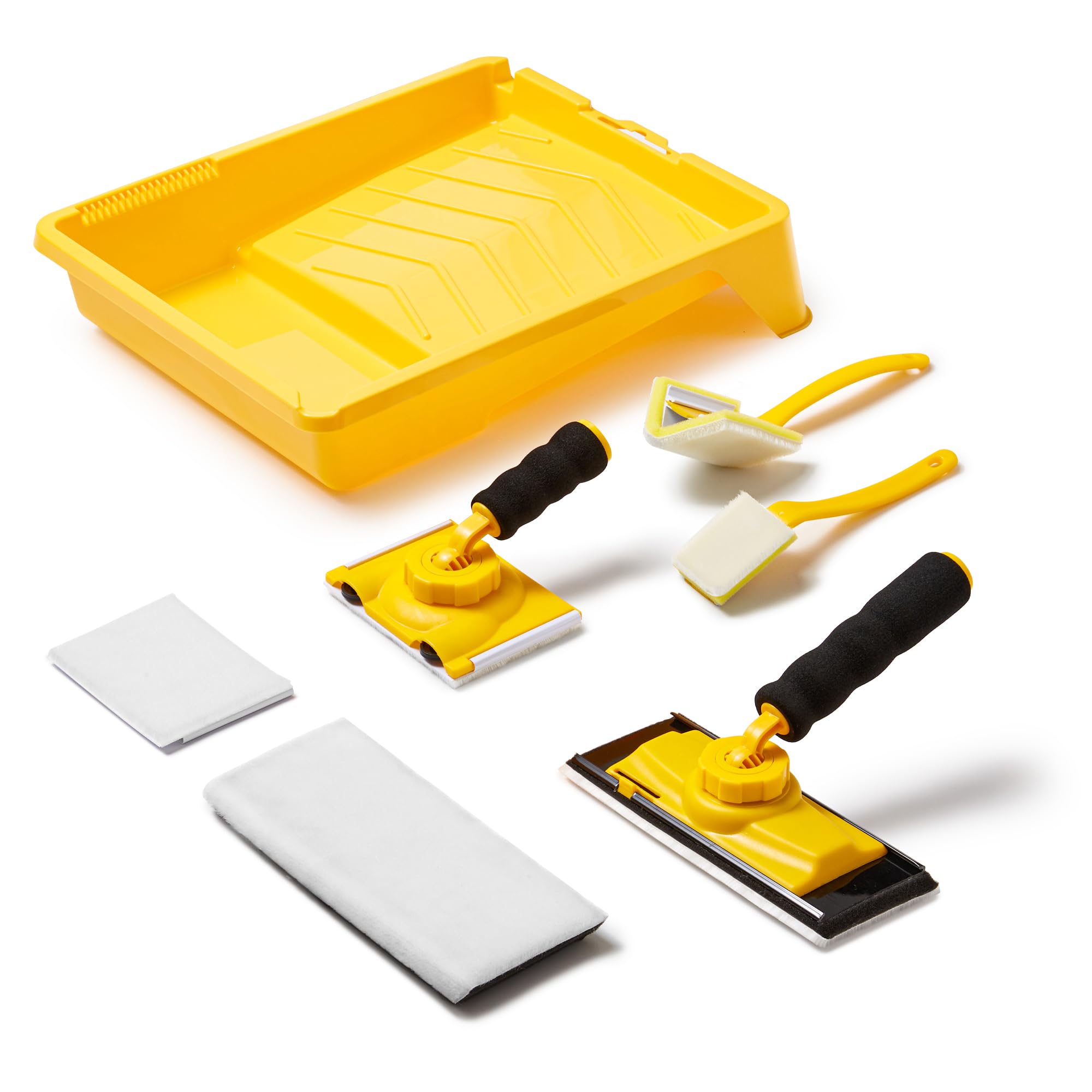
Seven pieces come in the kit: the 9-inch pad, a 360° rotating handle, a corner pad, a 1-inch mini trim pad, and a small tray. The rotating head is the piece that earns its keep, letting you keep your wrist straight while the pad lies flat against the joint.

We treat it as the whole-house kit rather than the everyday tool. If you have several rooms to do and want one box that covers the wall, the corner, and the last inch above the baseboard, the range is the point, and the tray keeps the paint you are using in one place instead of in a roller tray across the room.

The pieces are not equal. The wide pad is the strong part and the reason to buy the kit; the small corner pad is the one we trust least, since it can leave the middle of a corner short, so keep a brush in the other hand for the joint itself.

Bottom line: For a whole house in one box, this kit earns its keep: the 9-inch pad covers walls fast and the small pads handle the corners.

Check Latest Price
#05

Small touch-ups

NQEUEPN Paint Edger Trimmer

80 /100
Kirk Score Excellent
Pad Size
4.72 x 3.54 inches
Frame Material
Plastic
Replacement Pads
2 included
Check Details on Amazon

Pros

  • Press-tab pads swap in seconds
  • Rinses clean for reuse
  • Fits spots a roller cannot reach

Cons

  • Small pad makes long walls slow

Small, light, and honest about it: this is the edger we keep for touch-ups rather than the one we reach for on a whole wall. The pad is 4.72 by 3.54 inches on a plastic frame, two replacements come with it, and the whole tool weighs under three ounces.

It is easy to live with. Press the tabs on either side and the pad lifts off for a swap; rinse it under a hose on a flat spray and it is ready for the next coat. On a ceiling edge it gets close enough that you can finish the last half inch with the brush you were loading from, and it fits the spots a roller never reaches.

Close is the operative word. It lands near the line rather than on it, and you will always finish by hand. For closets, patches, and the strip above a door that is a fair trade; a whole room wants the wide pad.

Bottom line: We keep one of these for touch-ups and tight spots: it will not win a race along a long wall, but it gets close enough to finish with a brush.

Check Latest Price
#06

Corners and trim

BANCOO Snap-Lock Paint Edger

79 /100
Kirk Score Very Good
Pad Width
3.5 inches
Paint Types
Latex, oil-based, stains
Pad Attachment
Snap-on
Replacement Pads
2 included
Check Details on Amazon

Pros

  • Snap-on pad stays put under pressure
  • 3.5-inch head suits trim and casing
  • Two refill pads included

Cons

  • One pad width for every job

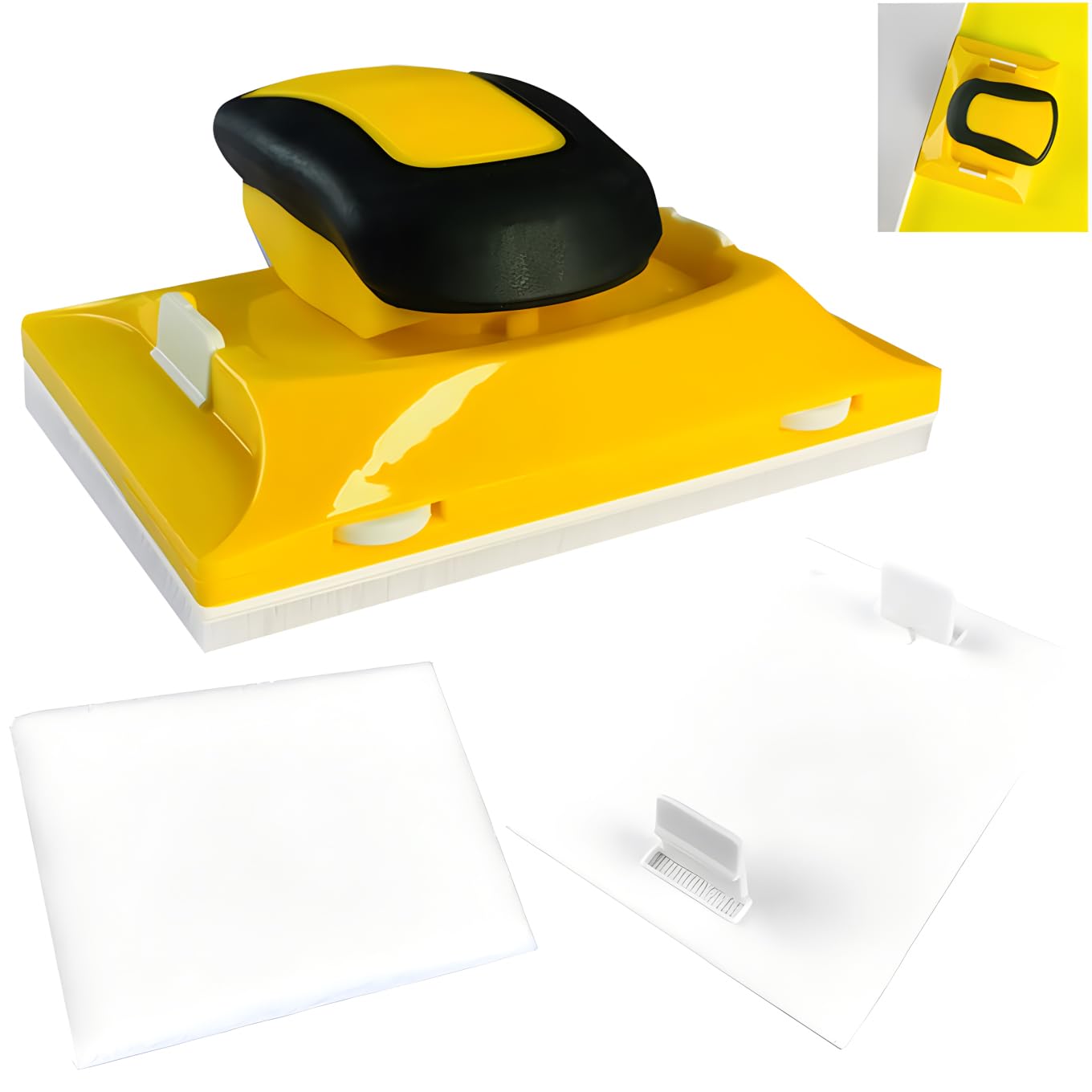
The pad snaps onto the frame instead of sliding into a track, and that is the detail that separates this one from the other pad edgers here. Lean on it against a wall and the pad stays where it is clipped rather than creeping back in its channel.

We think the 3.5-inch head is a sensible compromise for trim and baseboard: narrow enough to run along casing without slopping onto the wall, wide enough that a door surround does not take twenty passes. The fiber filaments hold a usable charge, and the frame is listed for latex, oil-based paint, and stain, which covers most of what trim work throws at it.

Load it lightly. A wet pad throws a ridge you will chase with a brush; a damp one lays a line you can live with. That is where the difference between a good result and a mess comes from with this tool, and it will not match a taped edge on a wall you care enormously about.

Two refill pads are in the box and the snap mount makes the swap quick, so it stays useful past the first room.

Bottom line: We rate the snap-on pad and the 3.5-inch head for trim and casing, provided you load it lightly and do not expect taped-edge precision.

Check Latest Price

How We Chose and Tested Paint Edgers

The shortlist started with a filter: if a tool couldn't be reloaded and reused, we skipped it. That meant replaceable pads or heads, guides that adjust or lock, and handles built to take pressure against a wall. We bought 14 edgers across the price range, mixing pad-style tools with brush-style squares and triangles so we weren't comparing one design against itself.

Testing ran three months, alongside a real repaint of two bedrooms, a hallway, and a stairwell. Every edger got the same jobs: cutting in along a ceiling line, running baseboard, edging around door casings, and working into inside corners. We timed setup and head swaps, and counted how often we had to stop and reload.

Paint absorption came first — how much each pad picked up, whether paint wicked through to the backing, and whether the first pass laid down even coverage or streaked. After every wall we checked the line, since a guide that wanders onto the ceiling is useless no matter how nice the handle feels. Cleanup got timed as well: a pad that takes ten minutes to rinse is one you stop reaching for. Brush heads that shed bristles got marked down fast.

By the end we knew which handles still locked tight, which pads sat flat after a dozen washes, and which refills held up like the originals — the value question in a category where cheap replacements quietly cost more.

How to Choose a Paint Edger

Guided pad or shaped brush

A wheeled or padded edger holds the line for you: the pad rides a guide wheel along the ceiling joint or the edge of the casing and lays a fixed-width band of paint. A shaped brush does the opposite, giving you a head that fits a corner and leaving the line to your hand and your pace.

Neither is more accurate in principle. The pad is quicker to learn on a straight joint; the brush is more useful once you are also doing casing, doors, and detail in the same session. If one edger has to cover a whole repaint, weigh how much of that work is wall meeting ceiling against how much is trim.

Match the head width to the run

Width is a speed-versus-control decision. The shaped brushes here run 22 to 24 mm across a face, which is precise and slow. Pads run from about 3.5 inches up to 9, and a 9-inch pad covers a long wall quickly while being clumsy along a door frame.

A 3.5- or 5-inch pad threads casing and baseboard without slopping onto the wall. Most people end up wanting a narrow head for trim and something wider for open runs, which is the case for a kit that includes several sizes.

Reach, poles, and high ceilings

At standard ceiling height, reach is a non-issue. Above a stairwell or in a two-story room it becomes the whole purchase: an extension edger runs from roughly 35 inches to 93, the difference between working from the floor and moving a ladder four times.

Two things to check. A pad eight feet from your hand is harder to steer, so lock the head angle before you raise the pole and work in overlapping strips. And a handle described as threaded for a pole does not include one, so budget for the pole separately.

Pads, refills, and cleanup

Pad material matters less than what arrives in the box. Nylon and fiber pads load paint differently, but all of them clog and stiffen once paint dries in them, so rinse under running water as soon as a section is finished; a flat spray from a garden hose does the job well.

Buy spares with the tool rather than after it. Most of the pad edgers here ship with two replacements, and snap-on and press-tab mounts make a swap a few seconds of work. A pad edger with no spare pads is a one-job tool.

Frequently Asked Questions

Final Verdict

Start with the ROLLINGDOG pair. Two shaped heads handle the corner and the flat run, the tapered filament puts paint down evenly, and the line stays under your control rather than under a wheel.

If you want the tool to hold the line for you, the Shur-Line's guide wheels do that for the least money here. And if a ceiling over a stairwell is the reason you are shopping, the Cagaloi's 93-inch reach settles it before anything else on this list does.