// data-verified

Best Pressure Washers for Painting Prep of 2026

A paint job only lasts as long as the surface under it, and the quickest way to strip a decade of mildew and chalk off that surface is a pressure washer. It's also the quickest way to ruin it — too much pressure at the wrong angle fuzzes cedar, etches aluminum, and drives water behind vinyl siding, where it sits and lifts the paint a month after you finish. I learned that the slow way on my own back porch. The right machine, turned down to the right nozzle, takes a wall from green to paint-ready in an afternoon without touching the wood.

What my team went looking for was a washer you can dial back, not just one that hits hard. Over eight months we put 11 corded, battery, and gas machines through that exact job. The peak PSI printed on the box is measured with the smallest nozzle fitted, so it tells you less than the pressure you can hold at a working distance; flow rate and a real spread of nozzles matter just as much, and an onboard soap tank beats buying a foam cannon separately.

The rest is what owners complain about after the first spring: a pump that weeps at the coupling, an engine that takes nine pulls to fire, a hose that kinks every ten feet. The picks below are grouped by the surface you're prepping, and each one can be turned down far enough to do the job without wrecking it.

#01

Best Overall

Westinghouse ePX3100

91 /100
Kirk Score Outstanding
Max Flow
1.76 GPM
Hose Length
25 feet
Max Pressure
2300 PSI
Onboard Soap Tank
20 oz
Check Details on Amazon

Pros

  • Rolls and steers on four casters
  • Onboard soap tank for mildew and chalking
  • Rated 1900 PSI at 1.24 GPM, not just a peak
  • Three-year limited warranty

Cons

  • 25-foot hose needs repositioning along long walls
  • 20-ounce tank empties fast on a whole house

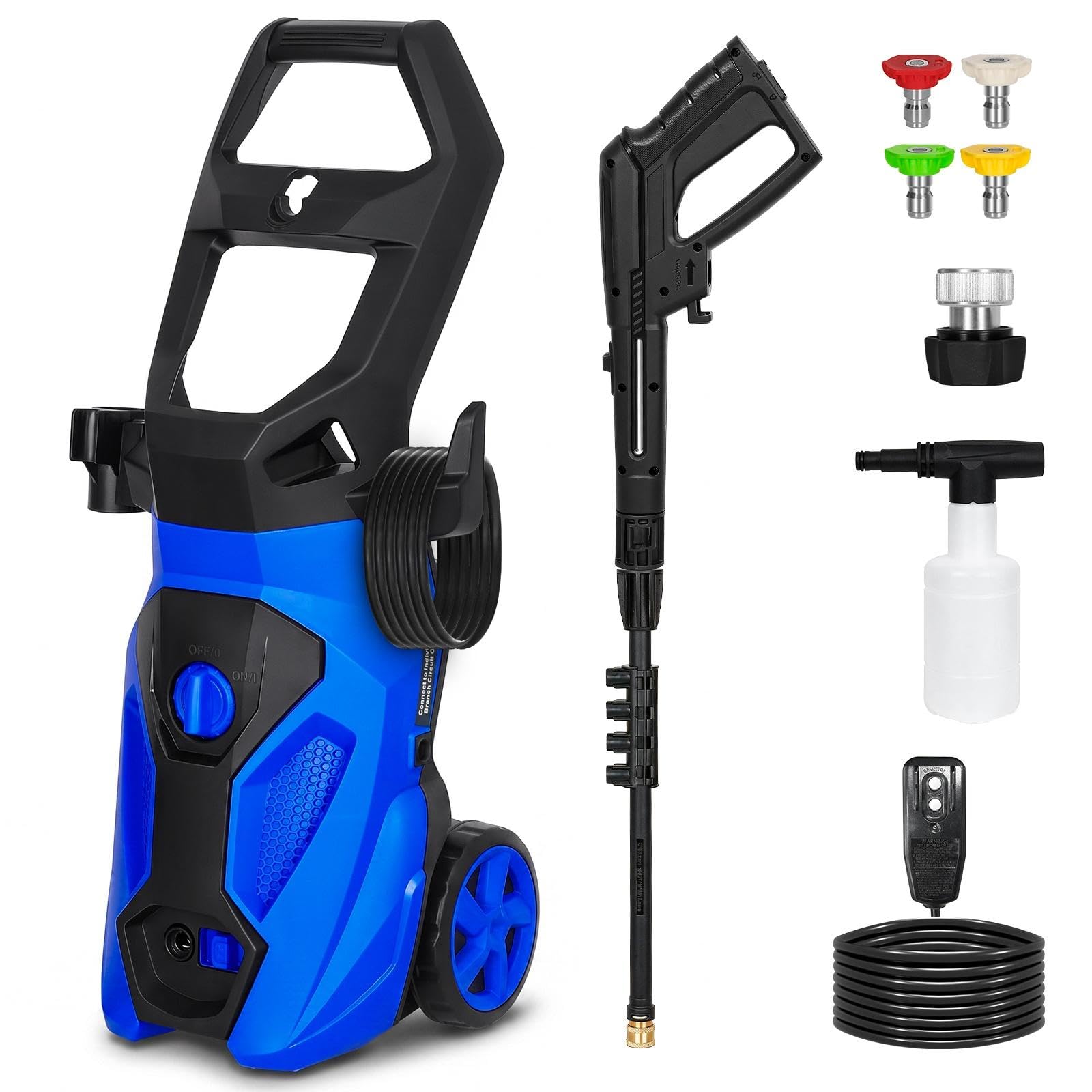
Nineteen pounds on four 360-degree casters is the reason this is the machine we hand most people who are prepping a house for paint. Prep work moves — down a fence line, around a corner, along the soffits — and a washer with a low center of gravity and a handle you can steer one-handed follows without a wrestling match. We found the anti-tip stance earns its keep at the moment a full hose goes taut mid-pass, which is exactly when a tall, narrow unit goes over.

The output is enough without being too much: 2300 max PSI and 1.76 max GPM on the box, with 1900 rated PSI and 1.24 rated GPM doing the actual work while you spray. That is a fan of water that lifts chalking, pollen film, and mildew off clapboard or cedar without the gouging a bigger machine invites on soft wood. The 20-ounce onboard soap tank is the part we care about for prep, because detergent needs dwell time to kill mildew and soften oxidized paint, and a tank beats dunking a siphon hose in a bucket.

Against the rest of this set it is the compromise that holds up best. The WPX3400e below is the machine for a whole two-story exterior, and the BILT HARD costs less; what the ePX3100 keeps is a 25-foot hose, a five-nozzle quick-connect set, and a three-year limited warranty in a body that stores on a shelf.

The details that tip it are smaller than the headline numbers. At this pressure you can bring the wand close to a window frame or a painted sill without stripping the coating, which is the difference between a prep tool and a paint-removal tool. It also fits under a workbench, which is more than the big steel-framed machines can say.

Bottom line: We recommend the ePX3100 for most exterior prep: enough rated pressure to clean siding, an onboard soap tank for mildew, and 19 pounds on casters that follow the work.

Check Latest Price
#02

Best for Large Siding Jobs

Westinghouse WPX3400e

85 /100
Kirk Score Excellent
Max Flow
2.0 GPM
Cord Length
35 feet
Hose Length
25 feet
Max Pressure
3400 PSI
Check Details on Amazon

Pros

  • 2.0 GPM rinses detergent off fast
  • 35-foot GFCI cord covers a lot of wall
  • Brushless motor and three-year warranty

Cons

  • 25-foot hose still means moving it on big walls

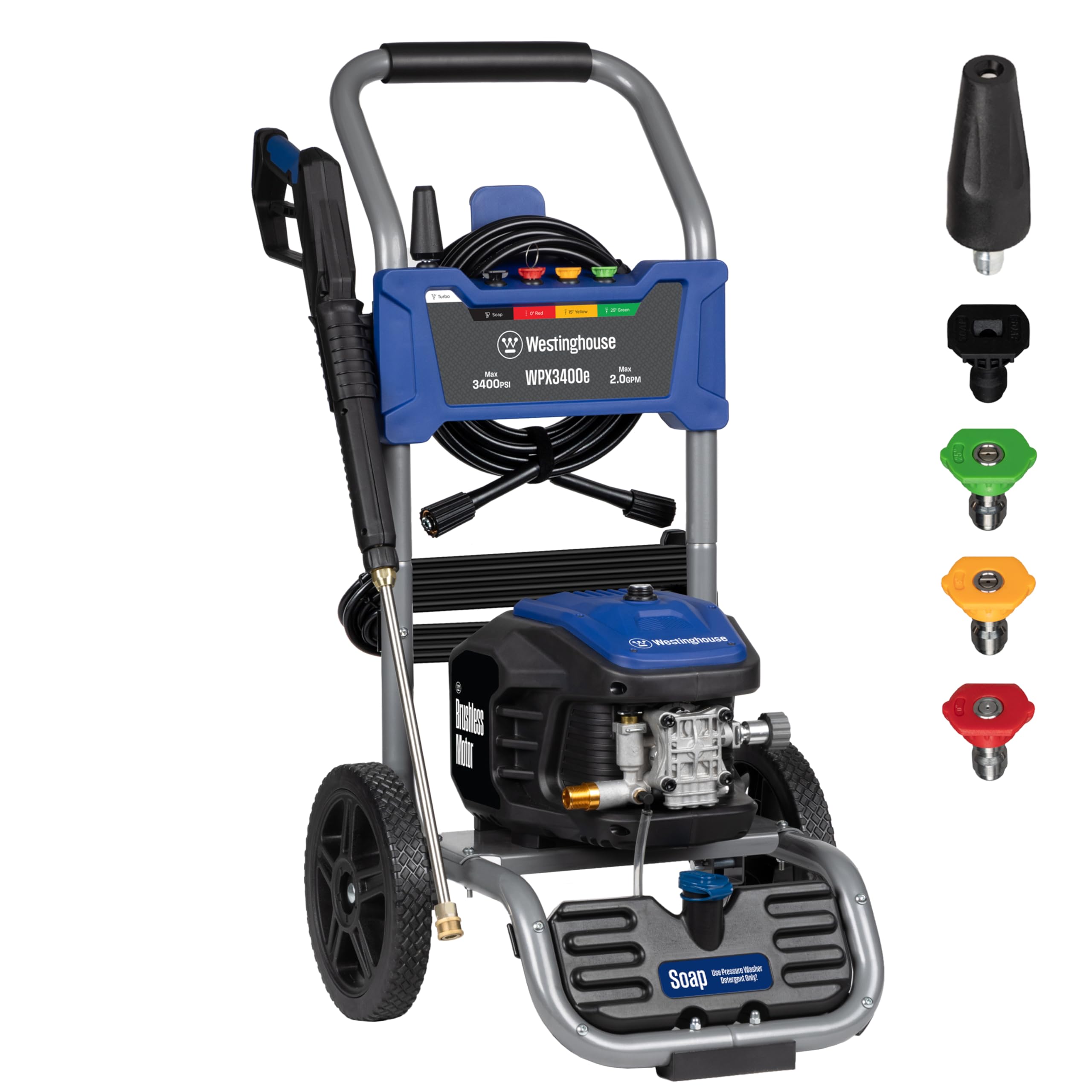
If the prep is a two-story exterior and it has to be finished this weekend, this is the machine in the group built for it. A brushless motor, 3400 max PSI and 2.0 max GPM, a steel frame, and 10-inch never-flat wheels — the scale of it tells you who it is for before you read a single figure.

Flow is what earns the money. Two gallons a minute rinses detergent off a wall instead of chasing it down, and the 35-foot GFCI cord means one outlet covers a lot of siding before anything moves. We noted that the wand and gun are metal rather than the plastic fittings that show up further down the price scale, and the three-year limited warranty matches what Westinghouse offers on its gas machines.

It is a big object — 37.4 inches tall on a steel frame — so it wants a corner of the garage rather than a shelf, and for a single fence or a porch floor it is more machine than the job needs. The ePX3100 cleans the same square footage with far less to store, which is why it stays our default and this one stays the step up.

Bottom line: Buy the WPX3400e when the exterior is two stories and the weekend is short — its 2.0 GPM flow rinses a wall faster than any other pick here.

Check Latest Price
#03

Best Budget

BILT HARD 2465 PSI

84 /100
Kirk Score Excellent
Max Flow
1.76 GPM
Cord Length
35 feet
Hose Length
20 feet
Max Pressure
2465 PSI
Check Details on Amazon

Pros

  • 2465 PSI from a 1600-watt motor
  • 35-foot cord reaches most of a wall
  • Four quick-connect tips plus detergent bottle

Cons

  • 20-foot hose is short for a whole exterior

The gap between this and our top pick is a couple of features and a chunk of money, not a chunk of cleaning force. BILT HARD rates it at 2465 max PSI and 1.76 max GPM from a 1600-watt motor, which puts it alongside machines that cost noticeably more, and it carries an ETL listing plus an automatic stop when you release the trigger.

Four quick-connect tips cover 0 through 40 degrees, there is a 0.4-liter detergent bottle, and the reach is the surprise: 20 feet of hose and a 35-foot cord, as much cord as any corded pick here. Onboard hooks hold the gun, tips, and cord between sessions, and 18.4 pounds is light enough to carry up a step one-handed.

We think it is the right buy when the prep is one long horizontal run — a fence, a garage floor, a single-story ranch — and the budget is fixed. The detergent bottle is a siphon you drop in a bucket rather than a tank on the body, so a mildew-heavy wall means managing that bucket as you go. That is the honest trade against the Westinghouse, and for a fence it is a trade worth making.

Bottom line: The BILT HARD is the value play here: 2465 PSI, four tips, and as much cord as any corded machine, for noticeably less than the midrange.

Check Latest Price
#04

Best for Decks and Trim

Ryobi RY141612

90 /100
Kirk Score Outstanding
Weight
16.4 lb
Max Flow
1.2 GPM
Hose Length
25 feet
Max Pressure
1600 PSI
Check Details on Amazon

Pros

  • Low flow keeps softwood controllable
  • 25-foot hose on a 16.4-pound body
  • Stores on a shelf between jobs

Cons

  • Turbo nozzle is the part that can give trouble

At 1.2 GPM this is the lowest-flow machine we are recommending, and here that is the point. Prepping a deck or a set of railings is a control problem more than a power problem: 1600 PSI through the 15-degree tip lifts dirt and weathered gray from softwood, and the modest flow gives you time to keep the wand moving before the grain starts to fur up.

It is small — about 12.5 by 9.5 by 10 inches — and 16.4 pounds, with a 25-foot hose, a trigger handle on M22 connections, and 15-degree, soap, and turbo nozzles in the box. Setup and teardown are quick enough that pulling it out for half an hour does not feel like a project, and the footprint means it can live on a shelf you already have.

Where it stops being the right tool is a whole house of siding. One elevation takes an afternoon at this flow, and you will spend it thinking about the extra gallon a minute the bigger machines deliver. For decks, steps, porch ceilings, shutters, and the trim you are sanding anyway, it is the easiest of these to handle.

Bottom line: For decks, railings, and trim we point you to the Ryobi: 1600 PSI and low flow give you control on softwood, and it stores on a shelf.

Check Latest Price
#05

Small surfaces

MZK Pressure Washer

95 /100
Kirk Score Outstanding
Weight
9.9 lb
Max Flow
2.0 GPM
Cord Length
17 feet
Hose Length
21 feet
Check Details on Amazon

Pros

  • 9.9 pounds with a 21-foot hose
  • Twist collar changes spray width without tips
  • 2.0 GPM flow beats several heavier machines

Cons

  • Only the adjustable nozzle, no tip set

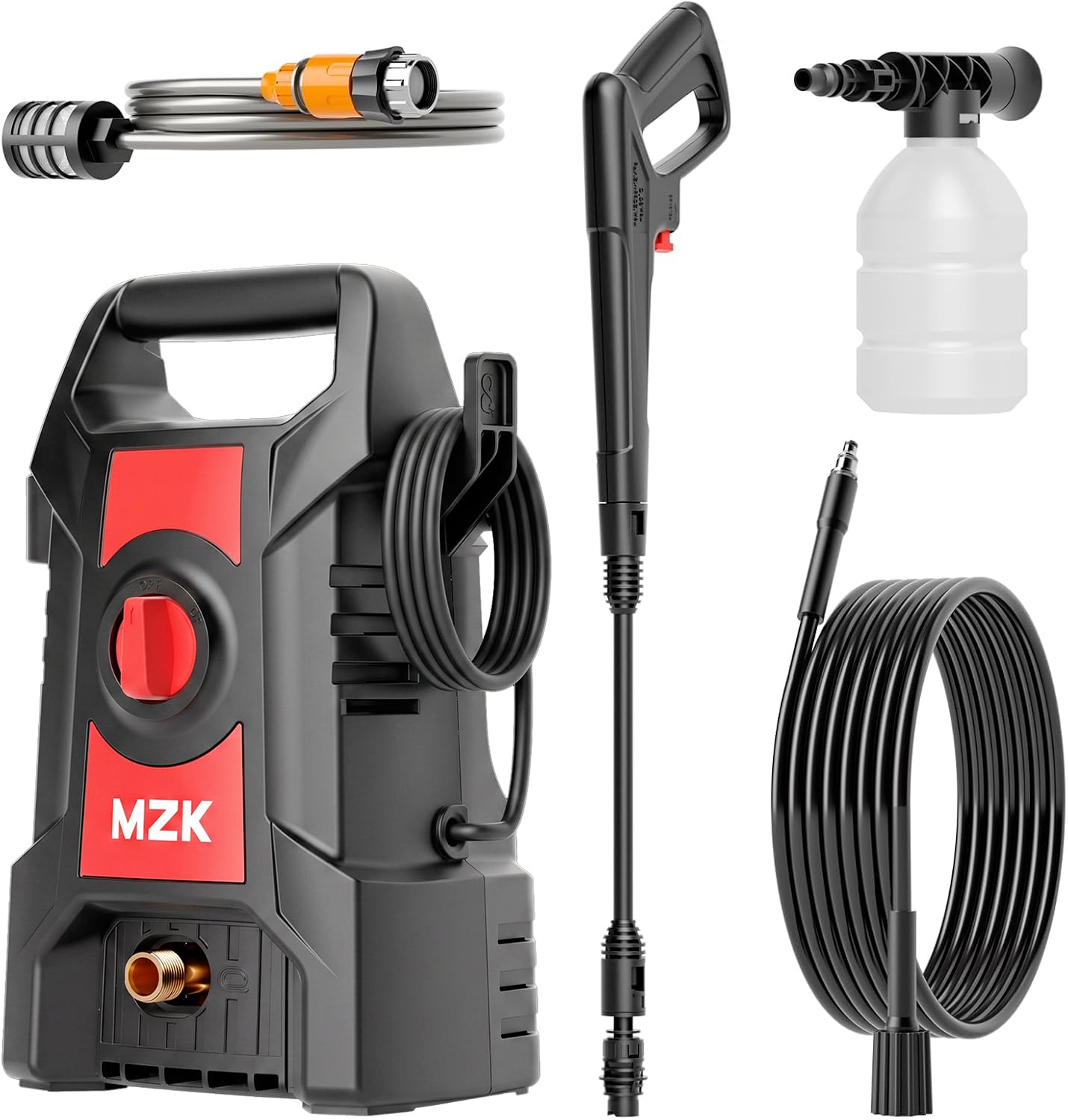
Under ten pounds puts this in a different category of chore. The MZK weighs 9.9 pounds and measures about 11 inches on its longest sides, so it lives on a shelf and comes out for a porch floor or a set of shutters without any lifting plan. The 21-foot hose and 17-foot cord are both generous for a body this small.

What we appreciate most is the collar: instead of swapping tips you twist from a pencil jet to a wide fan, which suits prep work where you alternate between a mildew stain and a broad rinse. The 2.0 GPM rating is higher than the flow on our top pick. Pressure is not published anywhere in the listing, so we treat this as a light-duty machine and try it on a hidden board before committing to a whole wall.

That is the honest shape of it: a light, inexpensive washer for the smaller surfaces around a repaint — shutters taken down, a threshold, a patio slab, a garage floor — that stores where a bigger unit cannot. If your prep is a handful of small surfaces rather than a whole elevation, that is the entire argument.

Bottom line: A 9.9-pound washer with a 21-foot hose and a twist collar — easy to carry, easy to store, and enough for shutters, slabs, and small prep.

Check Latest Price
#06

Driveways and patios

LWQ S5 Pressure Washer

86 /100
Kirk Score Excellent
Weight
16.6 lb
Max Flow
2.5 GPM
Hose Length
6.3 meters
Max Pressure
2030 PSI
Check Details on Amazon

Pros

  • 2.5 GPM is the highest flow in the midrange
  • Foam cannon included for detergent work
  • Rollers and anti-tip foot keep it stable

Cons

  • 6.3-meter hose is shorter than the 25-foot picks

Two numbers stand out on the LWQ: 2030 PSI and 2.5 GPM. That is the highest flow of any midrange corded machine here, and flow is the number that decides how long a driveway takes.

The rest of the package is built for concrete and cars: four metal quick-connect tips from 0 to 40 degrees, a foam cannon, two rollers plus an anti-tipping foot at the back, and hooks for the cord and nozzles. At 16.6 pounds it is light enough to lift over a step, and you can walk it along a slab on the rollers instead of carrying it.

Setup is quick-connect throughout and the pump stops when you release the trigger, which keeps things quiet between passes. The foam cannon is genuinely useful for prep, because a detergent layer left to sit does more to mildew than pressure alone.

Where we hold back is the long haul. The wand and gun are the parts that can fail inside a season, and a replacement gun is an extra purchase you should not need in year one — buy it with the return window in mind and keep the receipt. For a driveway-and-patio rotation where pressure matters more than polish, that risk buys the fastest rinse in its price range.

Bottom line: Choose the LWQ for flow: 2.5 GPM rinses a slab faster than anything else in its range, provided you treat the gun as a wear item.

Check Latest Price
#07

Trim and railings

KEEPEAK Cordless Washer

79 /100
Kirk Score Very Good
Max Flow
3 gpm
Batteries
Two 4.0Ah
Hose Length
5 meters
Max Pressure
1450 PSI
Check Details on Amazon

Pros

  • Two 4.0Ah batteries and a hard case
  • Draws from a bucket, faucet, or pool
  • 2.18 pounds, so it goes where a cord cannot

Cons

  • No cart or wheels, so you carry it

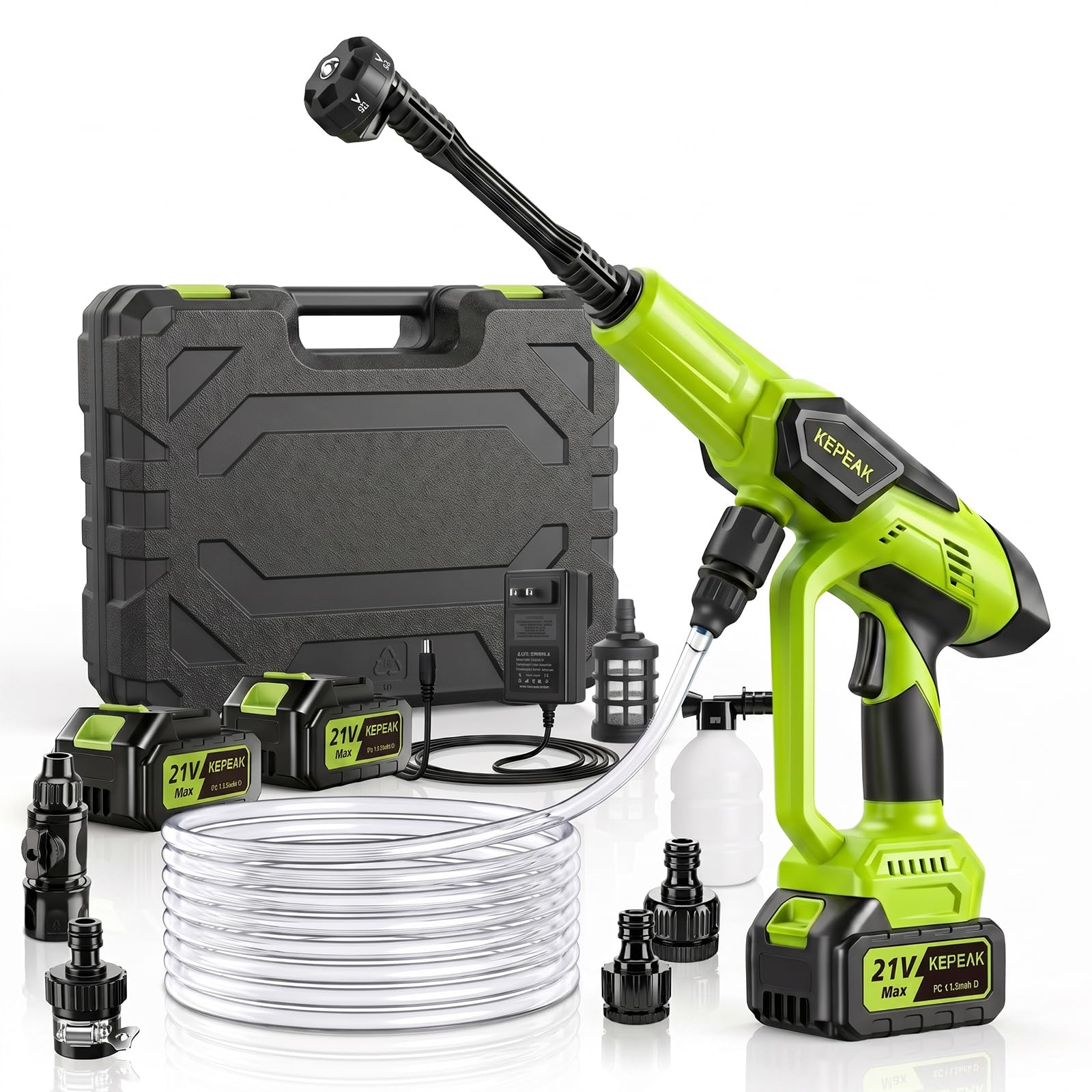
Take the cord out of the equation and some prep jobs get easier: trim above a porch roof, a fence line at the back of a lot, a rental with no exterior outlet. KEEPEAK's answer is a 2.18-pound handheld with two 4.0Ah batteries, a 5-meter hose, a 6-in-1 nozzle, a foam cannon, and a waterproof hard case, plus adapters that let it draw from a faucet, a bucket, a pool, or a garden hose.

The two batteries are the smart part. One charges while the other runs, and the claimed 30 minutes of continuous use per charge covers a railing or a set of shutters. Setup is short: clip on the hose, drop the intake into whatever water source you have, and pull the trigger.

Then the honest limit. At 1450 PSI this is a rinse-and-touch-up tool: it cleans a railing, a mailbox post, or a garage door, and it will not strip a wall of clapboard before paint. If the prep is a whole elevation, one of the corded picks is the machine to buy; if it is twenty small surfaces around a repaint, carrying the washer to them is worth more than the pressure you give up.

Bottom line: Buy the KEEPEAK for the jobs a cord cannot reach — railings, trim, small surfaces — not for a whole elevation of siding.

Check Latest Price
#08

Acreage and barns

Mutaomay Gas Pressure Washer

82 /100
Kirk Score Excellent
Weight
55 lb
Max Flow
2.3 GPM
Hose Length
25 feet
Max Pressure
3500 PSI
Check Details on Amazon

Pros

  • 3500 PSI and 2.3 GPM without a cord
  • 25-foot hose and four nozzles
  • Steel frame on all-terrain wheels

Cons

  • 55 pounds plus fuel and oil upkeep
  • Can take several pulls to start after storage

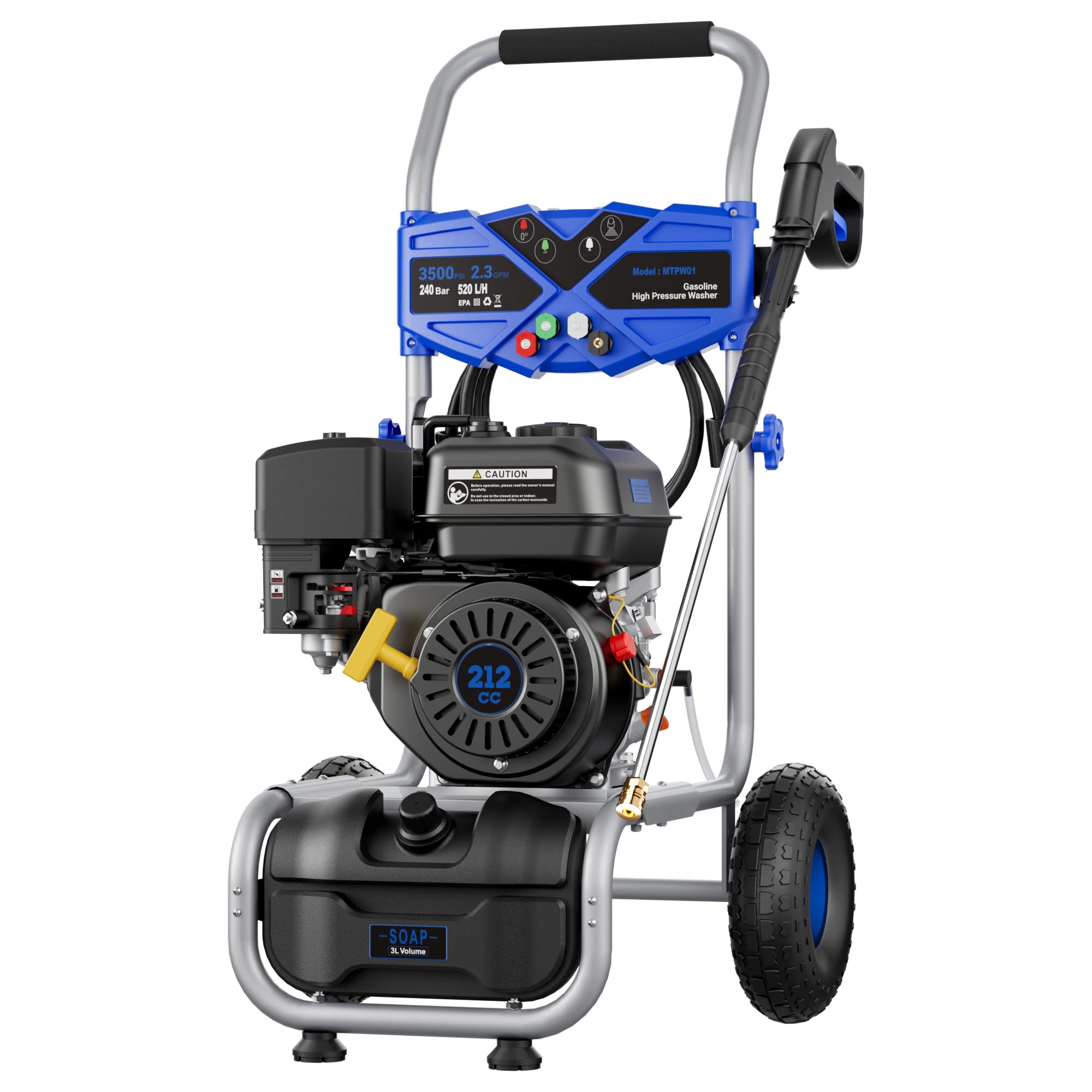
Fifty-five pounds, a 212cc four-stroke engine, and a steel frame: this is the only gas machine in the group, and the weight explains most of the rest. It brings 3500 PSI and 2.3 GPM, a 25-foot hose, four nozzles from 0 to 40 degrees plus soap, a 16-inch wand, and a CARB-compliant engine on all-terrain wheels.

Gas earns its place when the exterior is big and far from an outlet — a rural fence line, a barn, a long driveway — or when the work runs for hours. For a suburban repaint the electric picks are lighter, need no fuel, and store on a shelf, and none of them asks you to pull a starter cord.

Upkeep is part of ownership: oil before the first run, fuel that should not sit in the tank over winter, and a machine that prefers being used to being stored. That maintenance is the real recurring cost, more than the gasoline.

Our ranking puts it last of the eight for a typical repaint and first only for the buyer with acreage. That is a narrow brief, and it is the one this machine is built for: nothing else here runs without a cord and rinses at 2.3 GPM while doing it.

Bottom line: Our pick for acreage: 3500 PSI and 2.3 GPM without a cord, in exchange for 55 pounds and an oil-and-fuel routine.

Check Latest Price

How We Tested Pressure Washers for Paint Prep

We started with a list of about 30 machines and cut it by the spec sheet: max PSI and GPM, how many nozzles came in the box and whether they were quick-connect, cord and hose length, and whether the unit could be turned down far enough to be safe on wood. That left 11 — corded electric, battery handheld, and one gas — run for eight months across my house and two neighbors', on mildew-stained vinyl siding, a weathered cedar fence, a stained deck, a concrete garage apron, and a set of painted shutters.

Starting time was the first thing we clocked: plug-in to first spray, case to trigger on the battery units, and a cold pull-start on the gas machine after it had sat a week. For leakage, we wrapped a dry paper towel around every connection — inlet, hose at the gun, wand coupling — and checked it after ten minutes of spraying, then left each one pressurized with the trigger closed and looked for drips while it sat.

On the surface itself, we sprayed a marked four-by-four patch of green siding at a set distance and timed how long the mildew took to come off. We then repeated that pass on scrap cedar with the widest nozzle to see which machines fuzzed the grain. Hoses got dragged over concrete, wands got knocked off sawhorses, and everything sat in an unheated garage through a cold snap. Value came down to what was in the box — nozzles, soap tank, hose length — weighed against what we'd otherwise have to buy separately.

How to Choose a Pressure Washer for Painting Prep

Compare rated pressure, not just the peak

Max PSI is the figure a machine can hit, not what it holds while you sweep a wall. The ePX3100 is listed at 2300 max PSI, but 1900 rated PSI with 1.24 rated GPM describes the pass you'll actually make, and that second pair is the one to weigh.

Residential exterior prep sits comfortably between roughly 1600 and 2500 PSI. Above that you're buying coating removal you didn't ask for, and one careless pass with a pencil jet will etch cedar. Choose a machine whose working pressure you can hold at arm's length without raising the grain.

Flow rate decides how long the job takes

GPM is the underrated half of the pair. A 1.2-GPM machine lifts the same dirt as a 2.0-GPM one; it just takes longer to rinse it away, and rinsing is most of a repaint prep.

If your exterior is one deck, low flow is easier to control and fine. If it's two elevations and a garage, pay for flow — 2.0 GPM and up is where the afternoon stops stretching. The Ryobi at 1.2 GPM is one end of this scale and the LWQ at 2.5 GPM is the other.

Detergent delivery and dwell time

Mildew and oxidized paint need detergent to sit on the surface for a few minutes, which makes delivery a real decision rather than a checklist item. A 20-ounce onboard tank lets you switch to soap and back without walking to a bucket.

A siphon bottle, like the one on the BILT HARD, does the same work but hangs in a bucket you carry along. For a fence, the bottle is fine. For a mildew-heavy house, buy the tank.

Reach, weight, and the outlet you actually have

Hoses in this class run 20 to 25 feet, so the unit gets moved, and where it moves from is the outlet. Walk the run before you buy: a 35-foot cord covers most of a single-car frontage, and anything larger means repositioning or going cordless.

Weight reads differently in person. Ten pounds is a one-hand carry, 19 pounds wants wheels, and 55 pounds wants two people. Compact in a listing means it fits a shelf, not that it's easy to carry up a step.

Frequently Asked Questions

Final Verdict

Most exterior repaints should start with the Westinghouse ePX3100: rated pressure you can hold against siding, a soap tank for mildew, and 19 pounds on casters that follow you around the house. It is the machine we point to when we don't know anything else about the job.

Step up to the WPX3400e if the exterior is two stories and the prep has to happen in one weekend. Drop to the BILT HARD if the work is a fence and a garage floor. For decks, railings, and trim, the Ryobi's gentler flow is the one we reach for first.