// data-verified

Best Wire Stripping Machines of 2026

Stripping wire by hand with a utility knife works for about six feet. Then your thumb cramps, the blade skips, and you gouge the copper — the one thing the scrapyard docks you for. A wire stripping machine does it with feed rollers and a blade held at a fixed depth, peeling the jacket off in a clean spiral while your fingers stay clear.

We've spent the past seven months running 12 of these — drill-powered portables, hand-crank units, and benchtop electric models — through a garage floor's worth of scrap. The motor isn't what separates a good one from a frustrating one; it's whether the feed rollers grip a greasy cable, whether the blade dials in fine enough not to nick the copper, and whether any of the channels on the front actually line up with the wire you brought home. A machine that jams every third pass isn't saving you time.

The picks below run from small manual units for occasional wire to electric machines that eat a coil in minutes. What they share is that they'll strip the wire you actually have.

#01

Best Overall

VEVOR 60W Electric Wire Stripper

92 /100
Kirk Score Outstanding
Motor
60W gear motor
Weight
34.2 lb
Wire Range
0.06–0.98 in
Feed Channels
6 round + 1 flat
Check Details on Amazon

Pros

  • Seven feed channels including a flat slot
  • Clear cover makes blade setup easier
  • Stable cast-iron body
  • Covers 0.06–0.98-inch cable

Cons

  • No foot pedal included

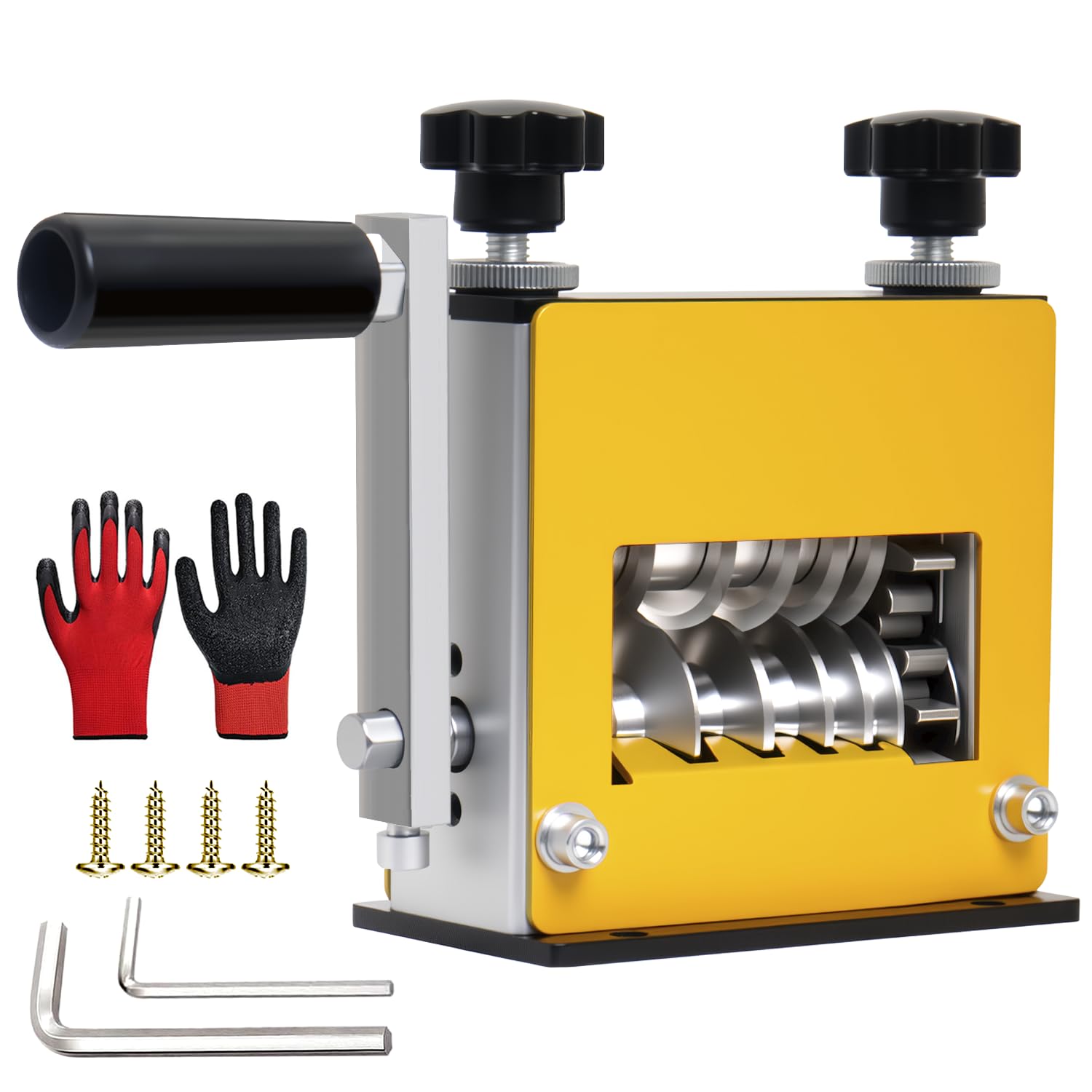
A home shop rarely needs a machine that can eat a utility pole, but it does need one that will not balk at a tangled box of mixed cable. That is the job the 60W VEVOR is sized for, and it is why this is our top pick. The geared motor takes the drill out of the equation, and seven feed openings, six round plus one flat slot, cover the ordinary scrap mix from thin appliance cords up to cable just under an inch.

What sold us is the combination of the clear acrylic cover and the cast-iron body. The cover lets you watch the blade meet the insulation, so the first cut on a new size is less of a guess. The cast iron keeps vibration down once the feed starts, and the hole markings save time when you move between sizes. This is a machine that feels settled rather than busy.

The 0.98-inch ceiling is the main boundary. It will not take the biggest service cable, and that is where the 370W VEVOR below earns its place. For the usual mix of THHN, appliance cords, and cable under an inch, the seven channels mean fewer blade changes and less fiddling. The cast-iron build also makes it a bench machine; at 34 pounds, it is not the one you chuck in a truck box.

A manual or drill-powered unit costs less and takes less space, so this VEVOR is not the starting point for a single tote of scrap. Once stripping becomes a recurring chore, the geared drive and broad feed set make it the least fussy way here to get repeatable strips without borrowing a drill.

Bottom line: We make the VEVOR 60W our top pick for mixed home scrap: its geared motor and seven channels make repeatable strips without a drill, and the range covers most ordinary cable.

Check Latest Price
#02

Best Drill-Powered

StripMeister Original

94 /100
Kirk Score Outstanding
Body
Aircraft-grade aluminum
Power
Drill-powered
Weight
3.8 lb
Wire Range
1/8–3/4 in
Check Details on Amazon

Pros

  • Fast drill-powered stripping
  • Small 3.8-pound body
  • Simple reference-mark setup
  • Works on 1/8–3/4-inch cable

Cons

  • Kinked cable can ride up on the cutter

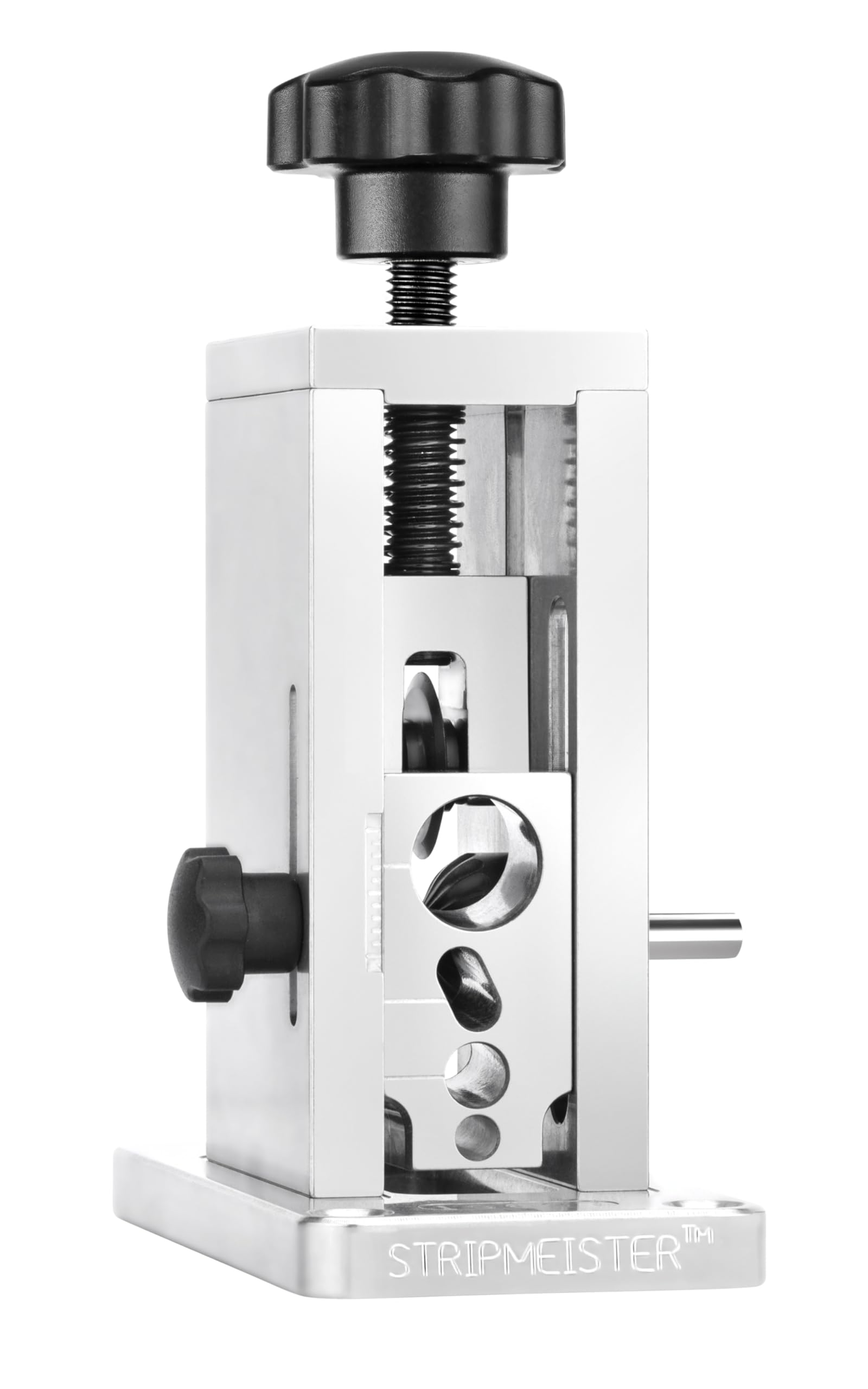
Set the StripMeister Original beside the drill that powers it and the machine looks almost too small for the job. That is the appeal: a 3.8-pound aluminum block that can sit on a bench or go in a toolbox, then strip cable from 1/8 to 3/4 inch once you add a drill.

We liked the speed most. The drill does the pulling, so you guide the cable instead of squeezing a handle all afternoon, and the reference marks shorten setup on a new size. On clean, straight scrap it feeds smoothly and the cut stays consistent; the machine feels like an extension of the drill rather than another tool to fight.

The larger end of the 3/4-inch range asks more of a drill than a compact 12-volt model can give, and the machine works best when you let the drill pull rather than pushing cable into the blade. We also liked that the body has enough mass to stay put for short runs without bolting it down. It is the drill-powered unit we reach for when the scrap is already sorted and the runs are short.

Bottom line: For portable scrap work, we choose the StripMeister Original: it is small, fast, and easy to set up, provided you own a drill and feed it straight cable.

Check Latest Price
#03

Best for Large Cable

VEVOR 370W Electric Wire Stripper

89 /100
Kirk Score Excellent
Motor
370W
Weight
50 lb
Wire Range
0.06–1.5 in
Feed Channels
11
Check Details on Amazon

Pros

  • 11 channels cover up to 1.5-inch cable
  • 370W motor pulls heavy cable
  • Emergency stop and clear guard
  • Extra blade included

Cons

  • 50-pound body needs a dedicated bench
  • Thick cable may need a second pass

The 370W VEVOR is the machine in this group that makes a trailerload of service cable look like a reasonable afternoon. Its 11 channels and 1.5-inch ceiling go well past the limits of the smaller units, and the 370-watt motor pulls heavy cable without asking for a drill.

We were glad to see an emergency stop and a transparent guard on a machine this strong; when you are feeding thick cable, the ability to stop the drive without reaching around the housing matters. The cast body and wide stance keep it from walking under load, and the extra blade in the box is a sensible inclusion.

For a shop that processes large cable regularly, the time saved on the rest of the pile is the point. The 370W motor does not tire the way a drill does, and the 11 channels let you keep one machine set up for several sizes instead of swapping tools. It is a production tool, and it rewards being left in place.

Bottom line: When large cable is the job, we give this VEVOR the bench: 11 channels, a 1.5-inch ceiling, and a 370W motor that does not tire like a drill.

Check Latest Price
#04

Best Budget

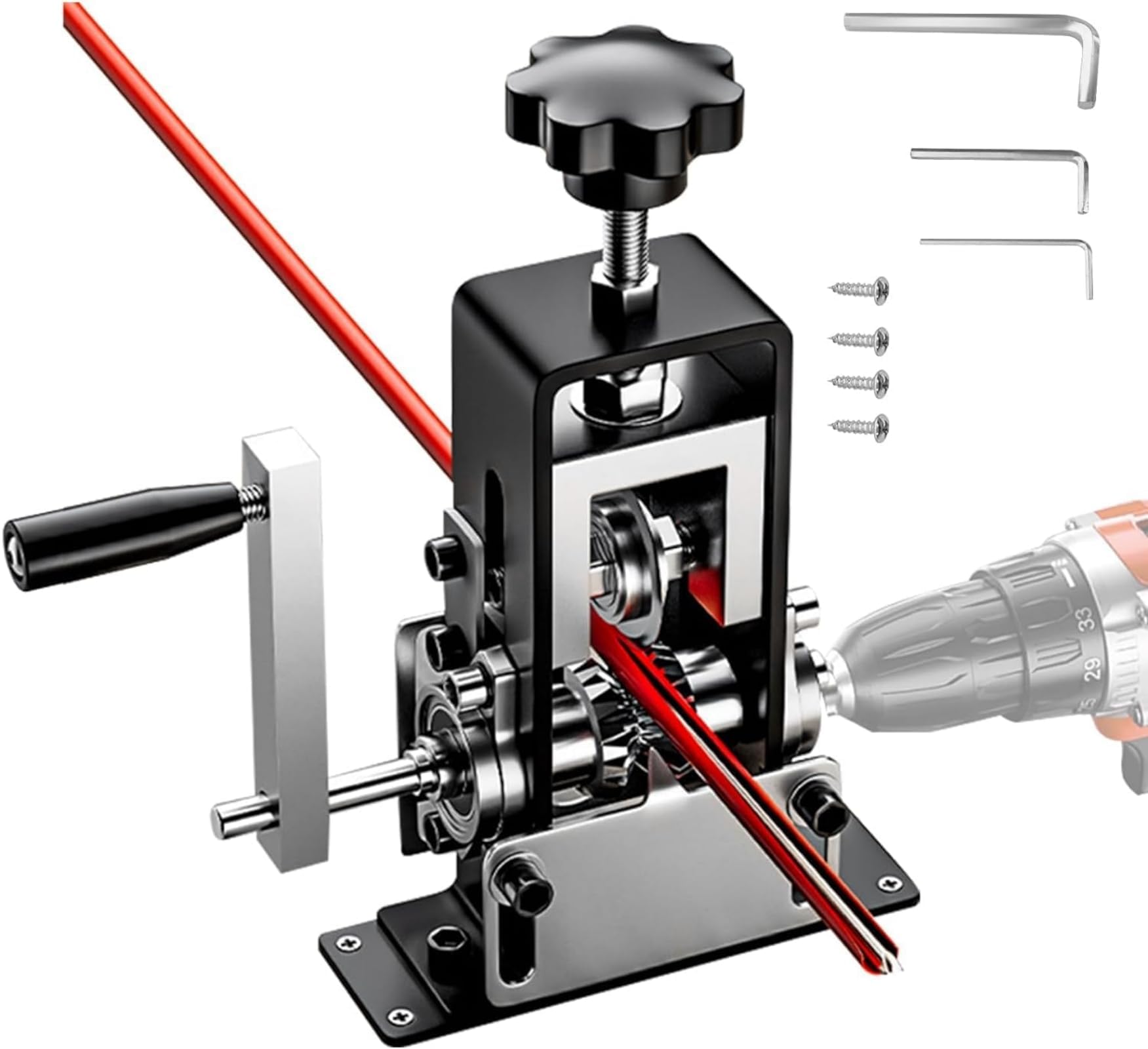
Hizmivos Manual Wire Stripper

87 /100
Kirk Score Excellent
Body
Aluminum
Power
Hand crank or drill
Weight
3.3 lb
Wire Range
0.06–1 in
Check Details on Amazon

Pros

  • Hand crank and drill modes
  • 0.06–1-inch range
  • Light 3.3-pound body
  • Low-cost entry

Cons

  • Blade depth takes trial and error
  • Blades dull with steady use

The Hizmivos is the least expensive way into a machine here, and it still gives you both a hand crank and a drill coupling. That double duty is why it earns a budget recommendation: you can use it without power, then add a drill when a run gets long.

We found the 0.06–1-inch range and adjustable blade cover the usual mix of appliance cords and scrap cable, and the 1.5 kg body is easy to move from shelf to bench. The hand crank is genuinely useful away from an outlet, and the drill mode has enough grip for straightened cable. The feed holes are clearly sized, which shortens the hunt for the right opening, and the aluminum frame stays put once you start a run. It feels like a small machine that knows its limits rather than a toy.

For a first machine or a backup for a truck, that combination is hard to argue with. It will not keep up with an electric unit on a production pile, but it also will not take up a bench or demand a dedicated outlet.

Bottom line: On a tight budget, we point you to the Hizmivos: hand crank or drill power, a useful 0.06–1-inch range, and a small body, with blade life as the compromise.

Check Latest Price
#05

Best for Mid-Size Cable

TORRIDE Wire Stripper Machine

86 /100
Kirk Score Excellent
Power
Hand crank or drill
Blades
5
Wire Range
3–17 mm
Feed Channels
6
Check Details on Amazon

Pros

  • Quick-change blade cover
  • Six channels and five blades
  • Tungsten-steel cutter
  • Hand crank or drill power

Cons

  • Limited to 3–17 mm cable

The TORRIDE's quick-change blade cover is the detail that separates it from the other mid-priced manual units here: four screws and the blade is out, which turns a dull edge from a project into a short stop.

Its six feed channels run from 3 to 17 mm, and the five blades and tungsten-steel cutter give it more range than the smallest manual machines without a full-size electric footprint. We liked the drill mode for anything longer than a few feet; the hand crank is there for short cuts and for when you do not want to fire up a drill. The aluminum frame has enough heft to stay steady without needing a permanent mount.

For the middle ground, this is the manual unit we reach for. The quick blade change makes upkeep less of a hurdle, and the drill mode keeps a long pull from becoming a hand-crank marathon.

Bottom line: The TORRIDE is our middle-cable specialist: six channels, five blades, and a quick-change cutter make it a practical step up from the cheapest manuals.

Check Latest Price
#06

Light DIY jobs

FAITIO 2-in-1 Wire Stripper

85 /100
Kirk Score Excellent
Body
Aircraft-grade aluminum
Mount
4-hole bench base
Power
Hand crank or drill
Wire Range
1–21 mm
Check Details on Amazon

Pros

  • Pre-adjusted blade depth
  • Four-hole bench-mount base
  • Covers 1–21 mm cable
  • Hand crank and drill modes

Cons

  • Stops at 21 mm cable

Set the FAITIO next to the Hizmivos and the difference is mostly in the base and the blade setup. The FAITIO has a four-hole bench-mount base and a pre-adjusted blade depth, which sounds like a small thing until you are trying to keep a short cable from wandering across a workbench.

Its dual hand-crank and drill operation covers the same basic job as the budget pick, and the 1–21 mm range handles appliance cords, auto harnesses, and the usual mixed scrap. We liked the textured body and the bench base more than the hand crank itself; bolting it down makes the drill mode feel steadier than a loose unit. The pre-set depth is a useful starting point for new users, though it still needs a test pull on unfamiliar insulation.

For light DIY work and a bench that stays put, the pre-set depth and mounting holes make it a tidy low-cost choice. It is not the machine we reach for on a production pile; the geared VEVOR and the compact StripMeister are better suited to long runs.

Bottom line: We recommend the FAITIO for a light-duty bench: the pre-set depth and four-hole base add stability, though the range stops at 21 mm.

Check Latest Price
#07

Dirty drill-fed scrap

StripMeister Original Pro

87 /100
Kirk Score Excellent
Power
Drill-powered
Feeder
Ultra Grip
Weight
3.8 lb
Wire Range
Up to 3/4 in
Check Details on Amazon

Pros

  • Ultra Grip feeder
  • Replaceable parts
  • 3.8-pound aluminum body
  • Heat-treated tool-steel blade

Cons

  • Premium price for same 3/4-inch ceiling

The Original Pro is the upgraded version of our favorite drill-powered machine, and the upgrade is mostly in the feeder. StripMeister calls it Ultra Grip, and the difference is meant to show up when the cable is slick, slightly out of round, or covered in the kind of dirt that makes a standard feed wheel lose its bite.

The rest is familiar: a 3.8-pound aluminum body, a drill coupling, and a 3/4-inch ceiling, plus replaceable parts and a heat-treated tool-steel blade. We liked that the Pro is serviceable rather than sealed; if a feeder or blade wears, the machine does not become a paperweight.

On clean scrap the cutting action is quick and the body stays planted for short runs. The Ultra Grip feeder is the reason to pay the premium, especially if your scrap comes from jobsites rather than a tidy recycling bin.

If your cable is usually clean and straight, the standard Original is the better value. If feed slip is the thing that slows you down, the Pro is the one we choose.

Bottom line: The Original Pro is the one we reach for when feed slip is the problem: Ultra Grip feeding and replaceable parts, provided the 3/4-inch ceiling and premium price fit your work.

Check Latest Price

How We Put 12 Wire Stripping Machines to Work

We rounded up every drill-powered, hand-crank, and benchtop electric stripper we could find, then cut the list to models whose feed openings could handle both thin scrap and the thick cable that actually pays at the yard. Twelve machines made it to the bench, and we've been using them for seven months — not in a lab, but in a garage with a five-gallon bucket of salvaged Romex, a tangle of dead extension cords, and a coil of heavy service cable.

Each machine got the same first job: strip ten feet of 12-gauge and ten feet of 8-gauge while we timed it, then repeat with a cable we'd deliberately handled in greasy gloves to see whether the rollers held or spun. We counted the feed channels, then ran the same wire through every one to find which lined up with the blade and which just chewed the jacket. Blade adjustment got tested in quarter turns, backing off until the copper stopped coming up nicked, then switching gauges to see how easily we could find that setting again. We also priced out replacement blades and checked what shipped in the box, since a machine with an odd-size blade is a paperweight once it dulls.

Speed we judged against our own hands — a unit that couldn't beat a utility knife on ten feet of scrap wasn't worth the bench space. Noise went on a meter held at arm's length, and we noted which machines had us reaching for ear protection by the third pass. Durability came from volume: fifty passes on one blade, checked against a sheet of paper for a clean bite, plus a look at roller play after a few weeks of steady use. Any unit that jammed more than once in a session dropped to the bottom of the list, however fast it ran when it worked.

How to Choose a Wire Stripping Machine

Start with the power source

A drill-powered or hand-crank machine is a compact head that does nothing until you add a drill or turn the handle. That makes it cheap, portable, and easy to store, but it puts the feed effort and the drill's own weight into the job. A self-powered electric unit like the VEVOR 60W has its own geared motor, which is the better fit if you strip often enough that setup and drill fatigue become the bottleneck.

The trade-off is bench space and cost. Electric units are heavier and want a permanent spot; drill units can live in a toolbox. If you already own a drill with decent low-speed torque, a drill-powered machine is the more flexible first purchase. If the drill is weak or you dislike the noise, choose the electric unit.

Read the diameter range and feed channels together

The headline range matters, but so do the number and shape of the feed openings. A 0.06–1-inch machine with six round holes and a flat slot can handle thin appliance cord and flat cable without changing machines; a 3–17 mm unit is aimed at common building cable and will not take the thinnest control wire. The range is a diameter, not a gauge, so check the cable you actually have.

More channels usually mean less blade resetting between sizes, but not always. Look for markings that match the hole to the size, and a flat slot if you process Romex or other ribbon cable. If your scrap is all one gauge, a narrower machine can be a better value; if it is mixed, pay for coverage. A big maximum alone is not coverage, so check the small end too. The VEVOR 60W and the larger 370W are the broadest here, while the manual TORRIDE is the middle-cable specialist.

Feed grip and blade depth decide the real work

A machine can have the right hole and still fight you if the feed wheel loses grip on a kink or the blade depth is wrong. Wire that rides up on the cutter means stopping, straightening, and re-feeding; wire that is cut too deep means nicked copper or shredded strands. The first test cut on a new size is not optional, even on a machine with pre-set depth.

Look for a visible blade adjustment, a guard you can see through, and a feeder that holds the cable against the cutter. A foot pedal is a convenience on an electric unit because it leaves both hands for the cable, but it is not a substitute for correct depth. On drill-powered units, let the drill pull the cable rather than pushing it into the blade.

Match the machine to the volume and the bench

A 3-pound drill unit is the right choice for a few dozen feet at a time; a 34- or 50-pound electric machine earns its footprint when you process boxes of cable regularly. Weight is not a flaw by itself, since it is what keeps the machine from walking under load, but it does decide whether the tool lives on a shelf or a bench.

Clamp or bolt the machine down if it has mounting holes, keep the feed path clear, and wear eye protection. Replacement blades and feeder parts are worth checking before you buy: a cheap machine with no spare parts becomes disposable when the edge goes. The StripMeister Pro is the clearest example here of a drill unit built for service rather than replacement.

Frequently Asked Questions

Final Verdict

The VEVOR 60W is our default because it turns a mixed box of cable into repeatable strips without a drill, and its seven feed openings cover the sizes most home shops see. If your work is portable, the StripMeister Original is the drill-powered pick we reach for; if you regularly handle service cable, the 370W VEVOR is the one that earns its bench space. Start with the cable you actually strip, not the biggest number on the box.